rDNS: [216.73.216.89]
ISP: [Amazon Technologies Inc., US]

Averaged results over the last 7 days.
For the past seven days.
LTE (Long Term Evolution) is one of the latest (as it lasts only a few years) standards of mobile data transmission. This technology is a natural successor to solutions such as UMTS/HSPA. Specific implementations of LTE are still being developed, but it can be estimated that the system will be used more often in commercial solutions. It is worth to take a closer look at its specification, some technical issues, and above all – benefits for the end-users.
LTE (in its basic version) is often referred to as a 3.9G or Super 3G technology. As can be seen, the term suggests that this standard does not fully comply with the specification of fourth generation networks.
One of the biggest advantage with regard to LTE is the extended possibilities for introducing additional services, which are attractive to the user and become more popular due to the development of communication technologies. It is mainly multimedia streamed to the recipient (VoIP, videoconferencing, VOD), which of course requires a high connection speed.
Digital subscriber line (DSL) – a technology of digital broadband access to the Internet. The standard maximum data download speed ranges from 8 Mbps to 52 Mbps and from 1 Mbps to 5 Mbps for upload speeds, depending on the country’s DSL technology. For ADSL technology, the upload speed is lower than the receiving speed, but the speeds are symmetrical with SDSL technology. The inventor of DSL modems was Joseph W. Lechleitter, an employee of Bellcore, who in the 1980s demonstrated the project of building these devices.
DSL technology can be used in most flats and small offices. Appropriate filters allow for simultaneous operation of telephone services and DSL. A DSL modem can use the same subscriber line as a POTS-based communication device, including faxes and analogue modems. Only one DSL modem can use a subscriber line at a time. A standard method of sharing DSL with multiple computers in the same premises is to use a router that establishes a connection between the DSL network and the local Ethernet or Wi-Fi network.
FITL (Fiber In The Loop) is referred to as subscriber access to a fiber optic network. It is an attractive solution for providing high bandwidth from the PBX to the end-user. FITL network is an optical network that implements access technology using most or all of the fiber optics.
Fiber optic is a transmission medium consisting of pure glass quartz fiber made of silicon dioxide, has a circular cross-section, in which the light is enclosed by an opaque outer casing of the central core. For light rays with frequencies close to infrared, the light reflectance is greater in the casing rather than in the core, resulting in a complete internal reflection of the beam and guiding it along the fibre axis.
The leading candidate for passive next-generation access networks is WDM wavelength multiplier technology.
Wireless local area network (WLAN) – a local area network in which connections between network devices are possible without the use of wires. In Poland, the term Wi-Fi (although originally it was the name of only one product using a specific WLAN standard) is used as a synonym for WLAN.
Such networks are usually made with the use of microwaves as a medium transmitting signals, but also with the use of infrared beam. They are designed on the basis of IEEE 802.11 standard, which describes physical layer and MAC.
The 2.4 GHz band (in standards: 802.11, 802.11b, 802.11g, 802.11n, 802.11ac) and 802.15.1(Bluetooth) or 5 GHz (in standards: 802.11a, 802.11n, 802.11ac) are used for microwave communication. In Europe, the 2.4 GHz band is divided into 13 channels in 2400-2483.5 MHz band with 5 MHz step (the middle frequency of the first channel is 2412 MHz). However, the band used by one network is about 20 MHz, so in practice there can be used only three networks without mutual interference, because the channels overlap. Each channel has its own carrier frequency, which is modulated for information transmission.
WiMAX (Worldwide Interoperability for Microwave Access) – wireless, radio data transmission technology. It is based on IEEE 802.16 and ETSI HiperLAN standards. These standards have been developed for broadband radio access in large areas. They specify information on equipment configuration so that devices of different vendors could operate on the same configurations, i.e. to cooperate with each other. In 2009, it was reported that the world’s largest cellular networks are resigning from this technology in favor of gradual migration to LTE standard.
It is estimated that the maximum bandwidth of WiMAX technology is close to 175 Mbps. This is a very future-oriented speed, competitive even with wired solutions. To obtain it, the receiver cannot be placed further than 10 km from the transmitter.
Satellite Internet services are used in places where terrestrial Internet access is not available and where mobile Internet access is required. Satellite Internet access is available globally, also for vessels at sea and ground vehicles in motion.
Satellite access systems usually operate in two frequency bands: Ku (10-18GHz) and Ka (18-31GHz). Ka-band is divided into two sub-bands: dedicated for “downwards” link (satellite – terminal) – 19.7-21.2 GHz and for “upwards” link (satellite terminal) – 29.5-31 GHz. There are also plans to use the so-called V-band (40-75GHz) in satellite communication. Multi-access to the system is implemented in MF-TDMA (Multi Frequency Time Division Multiple Access) technology, which consists in separating specific time slots for the user in a given (one of many) frequency band (3 dimensions of transmission – time, frequency and signal level).
5G, 5th generation mobile technology.
Key performance requirements defined for 5G networks:
There are many potential advantages that a new standard can bring. Thanks to the above mentioned technological solutions, the next generation network is to be much faster than 4G. Both in terms of transfers and reaction time, as well as it is characterized by stability and reliability. It will also support a larger number of devices, which is particularly important given the growing number of gadgets connected to the Internet and the popularization of such solutions as smart home.
Does Light Really Need a Cable to Transmit Data?
It turns out it doesn’t. Thanks to advances in modern transmission technologies, fiber optics no longer have to be a physical cable running through walls, across poles, and through gardens. Today, light can just as effectively transmit data through the air, retaining all the advantages of traditional fiber optics while eliminating its biggest drawbacks.
Light Works the Same Way – With or Without a Cable
In a traditional setup, an optical signal is transmitted through a thin glass strand known as an optical fiber. However, the act of transmitting data using light is not limited to a cable. Thanks to wireless fiber-optic technology, data can be transmitted by light between transmitting and receiving points—without any wires at all.
The result? The same, and often even better, speed (hundreds of Gbps and beyond) and reliability, without the typical issues associated with cables.
No More Failures, Damage, or Waiting for a Technician
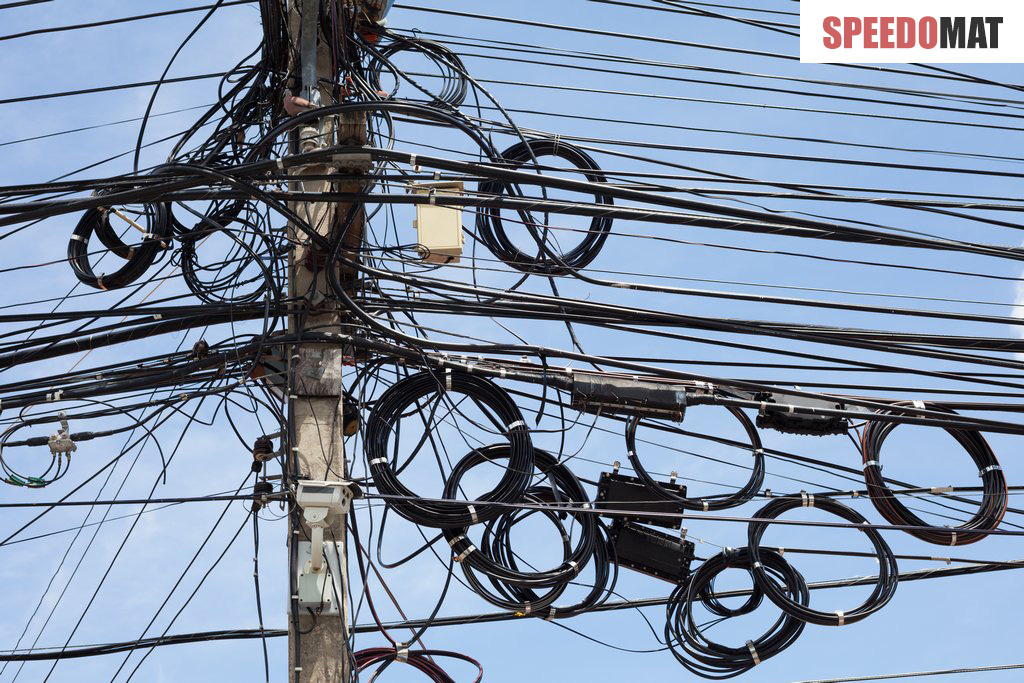
Glass fiber-optic cables are delicate. They can crack due to freezing temperatures, be chewed through by rodents, damaged by strong winds, or accidentally broken during renovation work. When that happens, you are left waiting for repairs, digging, and disruptive construction work.
By contrast, wireless fiber-optic solutions, such as those offered by Airmax, are immune to all of these problems. No cables means nothing to cut or break. No glass fibers means nothing to crack. No physical infrastructure means far fewer maintenance concerns—because there is simply much less that can go wrong.
Weather-Resistant – Always On
Airmax wireless fiber does not rely on cables, utility poles, or glass fibers, making it highly resistant to weather-related disruptions. It is not affected by:
Regardless of the weather conditions, the internet connection remains stable and uninterrupted, with no dropouts or loss of quality. This represents a new standard of reliability, eliminating the failures commonly associated with traditional cable-based infrastructure.
Speed and Quality Without Compromise
The speeds offered by wireless fiber-optic technology can reach and exceed 3 Gbps, as confirmed by Speedomat.net, an independent certified internet speed testing service. In addition, latency (ping) remains very low, and the connection stays stable even during adverse weather conditions.
For users, this means:
Aesthetic and Hassle-Free Installation
Wireless fiber does not require:
Installation is fast, clean, and minimally invasive. Your home, property, and surrounding streets remain untouched and visually appealing.
The Weakness of Traditional Fiber Optics: Fragile Glass Fiber
Feature |
Traditional Fiber Optics (Cable) |
Airmax Wireless Fiber |
|---|---|---|
Transmission Medium |
Glass Fiber |
Light Beam Through the Air |
Failure Rate |
High (cuts, cracks, breakages) |
Very Low |
Installation |
Invasive (drilling, digging, trenching) |
Non-invasive, Fast |
Aesthetics |
Visible Cables and Utility Boxes |
No Cables – Clean Environment |
Speed |
High |
Very High (up to and exceeding 3 Gbps) |
Stability After Storms |
Risk of Cable Damage |
Unaffected |
Coverage |
Limited by Cable Length |
Flexible, Easily Expandable |
Repair Time After Failure |
1–7 Days |
Usually Not Required |
Disadvantages of Traditional Fiber Optics – The Glass Fiber Is the Weak Link
Although transmitting data with light is a technology of the future, the glass fiber itself (the core of a fiber-optic cable) has several weaknesses, primarily related to its fragility and vulnerability to physical and environmental damage. Here are some of the factors that can damage it:
1. Mechanical Damage
2. Weather Conditions
3. Animals and Nature
4. Aging and Wear
Any of these issues can result in complete internet outages, reduced speeds, increased latency, or the need for expensive and time-consuming repair work. Wireless fiber technology does not rely on a physical transmission medium, so these problems simply do not apply. The light signal travels through the air without the risk of cable-related damage.
What Happens When an Internet Outage Lasts for Hours or Even Days?
When a traditional fiber-optic connection fails, users can become completely disconnected from the internet. While some outages last only a few hours, repairs often take days because they require:
During that time:
Today, losing internet access can effectively paralyze both daily life and business operations—all because of a single damaged fiber. Wireless fiber technology eliminates this problem by design, as there are no cables that can break.
Example Application: Live Cameras for Tourism
Municipalities, local governments, and tourism centers that operate live online cameras understand the importance of reliable, high-quality data transmission. Wireless fiber technology makes it possible to:
Promoting tourism through live camera streams generates real economic benefits, including attracting more visitors, increasing revenue for local businesses, and enhancing the destination’s public image.
Summary
Wireless fiber is a future-ready technology that is already available today. It delivers everything users expect from a modern internet connection: speed, reliability, aesthetics, and convenience—while eliminating the most troublesome aspects of traditional solutions, namely cables and cable-related failures.
Instead of accepting compromises, choose Airmax Wireless Fiber—modern internet connectivity without unnecessary complications.
Unlicensed radio spectrum is the most appropriate response to world demand for wireless services. Steadily growing popularity of next generation phones, tablets and similar devices is leading to a significant increase in demand for mobile data transmission.
According to a report published by Cisco Systems, network traffic increased by as much as 160 % in the last year. However, the bands through which this traffic is carried out prevent efficient and trouble-free transmission of data packets. This problem is encountered by users on an almost daily basis – it takes the form of rejected or interrupted phone calls and difficulties with access to the global Internet.
The main reason for this problem is the fact that availability of wireless spectrum, i.e. radio signals used by mobile operators to provide packet and voice data services, is highly limited. Spectrum is referred to as “invisible infrastructure” and “one of the key methods of wireless communication.” As this system is increasingly used, the US government, in cooperation with the FCC (Federal Communications Commission), aims to identify more effective ways to use wireless spectrum.
Spectrum can be divided into two types: licensed and unlicensed. The first includes frequencies that can be reserved for specific purposes. Unlicensed spectrum is available to the public, but users do not need a license to use it.
Reserving new unlicensed, unlicensed bands is a long and complex process, often requiring the implementation of legal reforms, which can only come into force a few years after their approval. Therefore, FCC recommends using unlicensed frequencies to extend the range of wireless services and relieve licensed spectrum.
Unlicensed frequencies have been used for some time to meet the needs of wireless communication. A huge success of solutions such as Wi-Fi and Bluetooth (which have created huge billions of dollars in revenue for businesses and corporations) is an example of proper use of unlicensed spectrum. It is worth noting that there are currently hundreds, if not thousands, of networks based on this solution all over the world. In the United States, unlicensed frequencies are used in large cities to operate emergency response systems.
What are the advantages of using unlicensed spectrum to manage communication systems? The most important is the unquestionably low cost of their operation. As it is not necessary to pay for the lease of a given frequency, the overall costs of network operation also decrease significantly. High operating costs and frequent overfilling of licensed bands are the main barrier for operators providing wireless services. The expenses incurred by companies are also reflected in the customers to whom they are often transferred.
Another advantage of unlicensed spectrum is the possibility of almost instantaneous configuration and launch of a network based on its use. In the case of systems using this technology, pre-planning requirements before system start-up are marginal, thanks to which the system can be launched extremely quickly. This is very important especially for authorities and companies responsible for public safety, rapid response in emergency situations and military forces. In the latter case, especially fast, reliable and scalable communication is essential.
As can be seen, the unlicensed spectrum offers users and service providers a great deal of opportunities. They are so great that the President of the FCC, Mr. Genachowski, commenting on the events that took place last autumn, when the committee made the unlicensed TV band available for commercial use, said: “Unlicensed bands will undoubtedly become platforms for innovative solutions in the future.” However, it should be noted here that unlicensed bands are not yet ideal solutions without any disadvantages. Their main disadvantage is susceptibility to interference. This aspect has so far prevented mobile operators from providing large-scale services in this way.
However, the situation gradually changes, mainly due to modern solutions implemented in the field of wireless communication – we cannot forget about the spread of cognitive radio systems, including AirMAX. This technology may contribute to further, rapid development of wireless communication. Cognitive radios are so advanced that they are able to make their own decisions about the time and length of transmission, on the basis of data on previous band usage and current transmission conditions. The components used in them enable quick adaptation to the specific environment, which in turn results in optimal transmission quality.
AirMAX uses advanced radio techniques in order to use frequencies that traditional cellular systems perceive only in terms of noise or interference. This enables the creation of efficient and reliable networks for packet and voice data transmission.
Cognitive radio systems such as AirMAX are used in mobile networks operating in rural areas as well as in systems enabling industrial, public or in-house communication. In all these areas, the lack of affordable licensed band has until recently been a major concern.
The arms industry must not be forgotten either. Within its framework, the AirMAX system can be used as a relatively inexpensive method of communication during warfare and training, as well as a tactical solution that makes it possible to transmit voice, visual and packet data on the battlefield.
The wireless communication industry is increasingly coping with the challenges posed by mobile data transmission, making fuller use of already available spectrum and constantly looking for new ones. Innovative technologies, such as cognitive radio, will certainly contribute to a more comprehensive use of unlicensed frequencies, which in turn will significantly reduce the burden on their licensed counterparts.